The issue of ‘stand your ground’ laws has come to the forefront in
light of the Zimmerman/Trayvon Martin incident in Sanford, Florida. But
what about if it happens in jail? When you get in a fight in jail, can
you get in trouble… especially if the ‘other guy’ gets hurt and he was
the one that started it?
The answer is both YES and NO.
Jails and prisons
are filled with violent people. Fights and violence are a way of life
for many of them. In addition, many of them have to make others believe
they are tough and not afraid in order to avoid fights… in other words,
peace through strength.
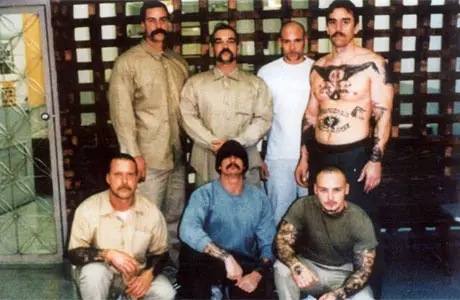
A large percentage of inmates have gang affiliations, owe or want to
collect on drug, tobacco or gambling debts, many are going through
withdrawl from drugs or alcohol addictions, most are dealing with
personal or family issues they no longer have control over.
Therefore, fighting is common. Fights are violent and quick; they end
within seconds of beginning because it’s impossible to hide them from
authorities as ‘eyes’ are everywhere. Any noises or scuffles out of the
ordinary can be heard and are immediately responded to. So when there’s a
fight, it ends as soon as it begins and in most cases, both inmates are
immediately thrown into segregation, it is investigated and the
incident is over.
Even when one inmate gets seriously hurt, with no witnesses, who is
to blame? And even if there is a guilty party, is anything done about
it? Rarely.
So, if you think you are going to get into a fight or are about to be
attacked when in jail, do as much damage to your opponent as you can in
the 10-60 seconds you have, because your opponent is the last person
you will be seeing for a while. And when you do get out of the SHU, your
actions before and during the brief fight will determine how much
respect others will give you from that point forward.
Jail and Prison is no different than life on the outside. The respect
people treat you with mirrors the respect you deserve. It’s just that
in jail or prison, you don’t have a lot of time to nurture that. Things
move quickly.
Showing posts with label dying. Show all posts
Showing posts with label dying. Show all posts
Tuesday, November 20, 2012

Criminal Courts – What Would Happen if Everyone Arrested Demanded a Trial of their Peers?
Statistics vary, but throughout America, it is believed that between
eighty and ninety percent of people arrested choose a plea agreement
with prosecutors rather than take their case to trial. Why is this, and
what would happen if everyone exercised their constitutional right to a
speedy trial by a jury of their peers?
An Inmate’s Fear
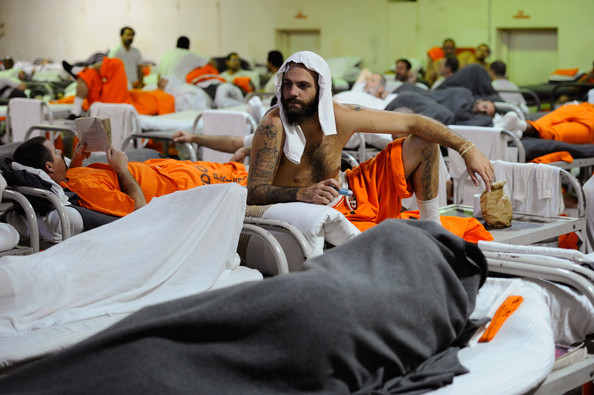
When a person is arrested for a crime they enter a zone of fear that has no equal. They risk losing their job, their reputation, their children and most important at that moment, their freedom. They are locked in a jail cell with people they don’t know or feel comfortable around, the food is terrible, they have no privacy and they have lost control of all their personal belongings.
The things they take for granted; the internet, cell phones, privacy when going to the bathroom, our television, our car… all of that disappears in jail. The fear of potential jail or prison time, getting in a fight and getting hurt, and being shunned by their families and friends will motivate them to take extraordinary measures.
Doing time in jail is so frightening to most people, they will do anything to avoid it. Therefore, when their court-appointed public defender approaches them with a ‘plea’, they reach out and grab it, taking the first offer thrown at them in order to escape their hell. But could they get a better deal from the prosecutor? And what would happen if they demanded a trial?

Fast and Speedy Trials
The Sixth Amendment of the Constitution of the United States gives everyone the right to a Fast and Speedy Trial by an ‘impartial’ jury. This means that a defendant has the right to a trial within a reasonable period of time that must be decided by a jury of their peers. Some states actually put a number on the definition of speedy.. and 90 days is the norm most places.
In general, the more serious the crime, the more time the prosecution is allowed to prepare their case. Prosecutors are willing to agree to plea agreements for lesser crimes (cases they consider a distraction, but that boost their conviction percentage) so they can focus on their more serious cases, cases that help their public image and careers.
However, these small cases, the vast majority (80-90%) of cases they prosecute, are for minor and insignificant crimes. And these are the ones that never make it to trial as the defendants are willing to ‘take a plea’ giving them short jail terms and probation rather than risk a greater punishment and the embarrassment that a trial would bring.
Demanding a Trial
If everyone arrested demanded their right to a court appointed lawyer (which they are entitled to by the Constitution) and a Speedy Trial by a jury of their peers, rather than taking a plea deal from the prosecution, there is no possible way the court systems in local counties (or the federal system) could handle the volume. Courts are already bogged down as it is now, as arrests are at levels that are unprecedented.
So…What Would Happen if Defendants Demanded a Trial?
Since county courts are already overburdened and operating on a limited budget and a limited time frame due to the defendant’s right to a speedy trial and expensive jail costs, the prosecutors would be forced to drop charges on more than half their cases. In fact, it is very likely that they would have to drop more than 75% of the cases they now handle.
A trial, even for a minor case, can take up to a full day at an absolute minimum. Even before the trial, interviewing and picking a jury from a pool can be another day of work. Then the jury has to be sequestered to decide on guilt, and in many cases, another day to decide a punishment.
Therefore, let’s just assume that a jury trial for each person arrested took 2-3 days. With some counties arresting hundreds of people every day, and a prosecutor’s office with a limited number of lawyers, you can see how quickly the system could get bogged down, both time-wise and financially.
The problem with this theory is that every inmate incarcerated or with a case pending would have to work together to bring the system to a halt, and the likelihood of that happening is unlikely.
An Inmate’s Fear
When a person is arrested for a crime they enter a zone of fear that has no equal. They risk losing their job, their reputation, their children and most important at that moment, their freedom. They are locked in a jail cell with people they don’t know or feel comfortable around, the food is terrible, they have no privacy and they have lost control of all their personal belongings.
The things they take for granted; the internet, cell phones, privacy when going to the bathroom, our television, our car… all of that disappears in jail. The fear of potential jail or prison time, getting in a fight and getting hurt, and being shunned by their families and friends will motivate them to take extraordinary measures.
Doing time in jail is so frightening to most people, they will do anything to avoid it. Therefore, when their court-appointed public defender approaches them with a ‘plea’, they reach out and grab it, taking the first offer thrown at them in order to escape their hell. But could they get a better deal from the prosecutor? And what would happen if they demanded a trial?
Fast and Speedy Trials
The Sixth Amendment of the Constitution of the United States gives everyone the right to a Fast and Speedy Trial by an ‘impartial’ jury. This means that a defendant has the right to a trial within a reasonable period of time that must be decided by a jury of their peers. Some states actually put a number on the definition of speedy.. and 90 days is the norm most places.
In general, the more serious the crime, the more time the prosecution is allowed to prepare their case. Prosecutors are willing to agree to plea agreements for lesser crimes (cases they consider a distraction, but that boost their conviction percentage) so they can focus on their more serious cases, cases that help their public image and careers.
However, these small cases, the vast majority (80-90%) of cases they prosecute, are for minor and insignificant crimes. And these are the ones that never make it to trial as the defendants are willing to ‘take a plea’ giving them short jail terms and probation rather than risk a greater punishment and the embarrassment that a trial would bring.
Demanding a Trial
If everyone arrested demanded their right to a court appointed lawyer (which they are entitled to by the Constitution) and a Speedy Trial by a jury of their peers, rather than taking a plea deal from the prosecution, there is no possible way the court systems in local counties (or the federal system) could handle the volume. Courts are already bogged down as it is now, as arrests are at levels that are unprecedented.
So…What Would Happen if Defendants Demanded a Trial?
Since county courts are already overburdened and operating on a limited budget and a limited time frame due to the defendant’s right to a speedy trial and expensive jail costs, the prosecutors would be forced to drop charges on more than half their cases. In fact, it is very likely that they would have to drop more than 75% of the cases they now handle.
A trial, even for a minor case, can take up to a full day at an absolute minimum. Even before the trial, interviewing and picking a jury from a pool can be another day of work. Then the jury has to be sequestered to decide on guilt, and in many cases, another day to decide a punishment.
Therefore, let’s just assume that a jury trial for each person arrested took 2-3 days. With some counties arresting hundreds of people every day, and a prosecutor’s office with a limited number of lawyers, you can see how quickly the system could get bogged down, both time-wise and financially.
The problem with this theory is that every inmate incarcerated or with a case pending would have to work together to bring the system to a halt, and the likelihood of that happening is unlikely.
Jail and Prison Myths and Truths – What Really Goes On in Jails?
For many people the idea of being in jail or prison is a frightening
one. Being locked in a building, surrounded by armed guards and layers
of razor wire can be daunting. But is it as bad as television, movies
and the media want us to believe? The answer is both yes and no.

MYTH or TRUTH
1. I could be killed in Jail.
True.
However, let’s look at the numbers. An eight-year study that reviewed all inmate deaths between the years 2000-2007, found that out of a total of 8,097 deaths, less than 2% (171) were homicides.
Given that approximately 15 million inmates were arrested and booked into jails each year, over an eight year period, the chance of being killed while in jail was 1/100,000 of one percent, or stated another way, a one-in-10-million chance.
On another note:
30% of all deaths in Jails were due to suicide.
53% of all deaths were due to Illnesses, including AIDS.
10% of all deaths were due to accidents or intoxication.
There was a 25% higher chance of being murdered in a prison than in a jail, however the chance of this happening at all was surprisingly remote,
2. I could get beat up in Jail.
True.
Jails and prisons are notorious for fights. As long as that is understood, fights can usually be avoided by trying to keep calm and showing respect towards the other inmates. However, as in life on the outside, sometimes fights cannot be avoided. In jail, it is rare that a fight lasts for more than 20-30 seconds. With guards and closed-circuit cameras everywhere and the unmistakable ‘silence’ that overtakes a ‘yard’, a dining area or any unit where a fight breaks out, not to mention the attention of every surrounding inmate, fights are ended by the authorities as soon as they begin. Even if a person can’t defend himself that well, if he hangs on, the police will come to end the disturbance immediately.
3. Jails are filthy and ridden with disease.
False and True.
Most jails and prisons are like hospitals. Because of the high concentration of people occupying them, the chance for disease to spread quickly, and the fear of lawsuits, a lot of attention is focused on keeping the facility clean. Everyone has a stake in keeping it clean, from the staff to the inmates, as no one wants to get sick. In addition, since inmates do all the work and any job is coveted as it means time out their cell, they will do whatever it takes to do an excellent job because there are plenty of people waiting in line for their job and they don’t want to lose it.
Most jails issue fresh clothing twice a week for men and more often for women. The clothing is cleaned in industrial washing machines, and while inmates are issued underwear that was worn by someone else prior to being washed, in general the clothing is always fresh and clean. Prisons assign used clothing, however as an inmate, you are able to purchase your own undergarments from the commissary.
On the other hand, there are issues with MRSA (staph infections), just as there are in health clubs and hospitals worldwide these days. Lice can also be a problem, primarily in female units where they tend to groom more frequently and spread these insects from scalp to scalp through direct contact such as braiding each other’s hair.
OETA Story on Jail Food in Muskogee County, Oklahoma
Jail Food Video
4. The food is terrible and unhealthy.
True and False.
Most jails and prisons buy their food from food brokers who sell lots of frozen and canned goods that are close to their expiration dates. Further, the boxes of frozen food are usually stamped with a label that clearly states ‘For institutional use only’, which is code for jails and prisons. It is never used for restaurants or any other use. Many inmate kitchen workers report cooking with food that comes in boxes stamped ‘not for human consumption’, a code for animal/pet food use. The food generally tastes as bad it looks.
Spices are rarely used so the food is bland. In place of meat, many meals are laced with a grainy mixture of corn meal that adds texture and fill, but has no flavor.
On the positive side, many jails and prisons now operate small farms where they use inmate labor to grow their own fresh vegetables and fruits. While it may not be organically grown, it is fresh and more healthy than the canned vegetable ‘throw away’ lots that are the only other option, and there is satisfaction in growing it.
Federal law mandates that inmates receive at least two hot meals a day, with a combined total of 2,000 calories. You won’t starve in jail, but given that accused terrorists being held at Guantanamo Bay receive a diet of 3,400 calories a day, it cannot be argued that our government thinks more highly of its American prisoners.
MYTH or TRUTH
1. I could be killed in Jail.
True.
However, let’s look at the numbers. An eight-year study that reviewed all inmate deaths between the years 2000-2007, found that out of a total of 8,097 deaths, less than 2% (171) were homicides.
Given that approximately 15 million inmates were arrested and booked into jails each year, over an eight year period, the chance of being killed while in jail was 1/100,000 of one percent, or stated another way, a one-in-10-million chance.
On another note:
30% of all deaths in Jails were due to suicide.
53% of all deaths were due to Illnesses, including AIDS.
10% of all deaths were due to accidents or intoxication.
There was a 25% higher chance of being murdered in a prison than in a jail, however the chance of this happening at all was surprisingly remote,
2. I could get beat up in Jail.
True.
Jails and prisons are notorious for fights. As long as that is understood, fights can usually be avoided by trying to keep calm and showing respect towards the other inmates. However, as in life on the outside, sometimes fights cannot be avoided. In jail, it is rare that a fight lasts for more than 20-30 seconds. With guards and closed-circuit cameras everywhere and the unmistakable ‘silence’ that overtakes a ‘yard’, a dining area or any unit where a fight breaks out, not to mention the attention of every surrounding inmate, fights are ended by the authorities as soon as they begin. Even if a person can’t defend himself that well, if he hangs on, the police will come to end the disturbance immediately.
3. Jails are filthy and ridden with disease.
False and True.
Most jails and prisons are like hospitals. Because of the high concentration of people occupying them, the chance for disease to spread quickly, and the fear of lawsuits, a lot of attention is focused on keeping the facility clean. Everyone has a stake in keeping it clean, from the staff to the inmates, as no one wants to get sick. In addition, since inmates do all the work and any job is coveted as it means time out their cell, they will do whatever it takes to do an excellent job because there are plenty of people waiting in line for their job and they don’t want to lose it.
Most jails issue fresh clothing twice a week for men and more often for women. The clothing is cleaned in industrial washing machines, and while inmates are issued underwear that was worn by someone else prior to being washed, in general the clothing is always fresh and clean. Prisons assign used clothing, however as an inmate, you are able to purchase your own undergarments from the commissary.
On the other hand, there are issues with MRSA (staph infections), just as there are in health clubs and hospitals worldwide these days. Lice can also be a problem, primarily in female units where they tend to groom more frequently and spread these insects from scalp to scalp through direct contact such as braiding each other’s hair.
OETA Story on Jail Food in Muskogee County, Oklahoma
Jail Food Video
4. The food is terrible and unhealthy.
True and False.
Most jails and prisons buy their food from food brokers who sell lots of frozen and canned goods that are close to their expiration dates. Further, the boxes of frozen food are usually stamped with a label that clearly states ‘For institutional use only’, which is code for jails and prisons. It is never used for restaurants or any other use. Many inmate kitchen workers report cooking with food that comes in boxes stamped ‘not for human consumption’, a code for animal/pet food use. The food generally tastes as bad it looks.
Spices are rarely used so the food is bland. In place of meat, many meals are laced with a grainy mixture of corn meal that adds texture and fill, but has no flavor.
On the positive side, many jails and prisons now operate small farms where they use inmate labor to grow their own fresh vegetables and fruits. While it may not be organically grown, it is fresh and more healthy than the canned vegetable ‘throw away’ lots that are the only other option, and there is satisfaction in growing it.
Federal law mandates that inmates receive at least two hot meals a day, with a combined total of 2,000 calories. You won’t starve in jail, but given that accused terrorists being held at Guantanamo Bay receive a diet of 3,400 calories a day, it cannot be argued that our government thinks more highly of its American prisoners.
Subscribe to:
Posts (Atom)